Having the right garden tools makes everything in the garden so much easier. If you’re just starting your gardening journey, here’s our guide to some of the tools you’ll need and what they do.
Ten excellent garden tools
-
Garden spades are sturdy with broadheads and are ideal for digging big holes, lifting turf and shovelling compost. Border spades are similar but have narrower heads. They’re lighter than garden spades and easier to use in borders for digging in between plants.
-
Garden forks have long, solid handles and sturdy prongs, ideal for breaking up compacted soil. They’re also helpful in aerating compacted lawns. Border forks are like garden forks but lighter, with narrower heads.
-
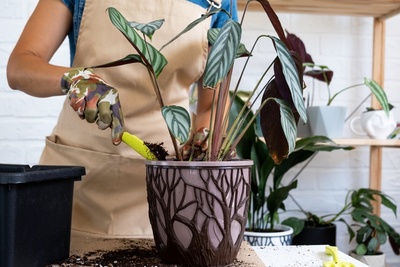
Hand trowels are small but sturdy, perfect for digging small holes and planting in beds and containers.
-
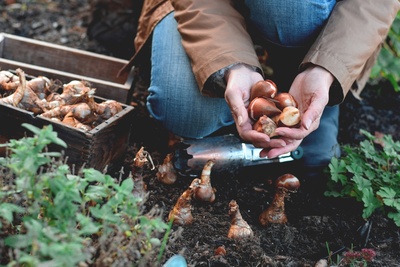
Hand forks are incredibly useful for weeding and harvesting small root vegetables such as carrots and beetroots. Just push the fork’s prongs into the soil under the roots of a weed or a plant you want to move, and lever the plant out of the ground, using your other hand to guide the plant.
-
Secateurs are cutting tools ideal for pruning small shrubs, deadheading and cutting back perennials. They fall into two main categories: bypass secateurs and anvil secateurs. Bypass secateurs have two sharp blades that cut using a scissor-like action, whereas anvil secateurs have one blade that closes against a flat metal or plastic plate. Bypass secateurs are suitable for precision pruning on soft or pliable stems, and anvil secateurs are ideal for old, woody stems.
-
Loppers are great for cutting branches that are too thick for secateurs. They have long handles, giving more leverage for tough jobs. Ratchet loppers have a geared mechanism that offers even more power, perfect for anyone with reduced strength in their hands.
-
Hedge shears with long, sharp blades are just what’s needed to give a crisp, clean edge to hedges or topiary.
-
Soil rakes have a straight head with strong teeth, ideal for breaking up clods of soil to produce a level, crumbly soil texture ready for sowing. Plastic-headed lawn rakes, also called spring tine or springbok rakes, are used for raking leaves, while metal-headed lawn rakes can be raked firmly through a lawn to remove moss.
-
Dandelion weeders have a long, narrow blade that can be pushed deep into the soil around a root to loosen it, removing the whole root so that the weed can’t grow back.
-
Patio weeders have a sharp right-angled blade, ideal for getting rid of weeds between paving slabs without having to resort to chemicals.
Whatever garden job you want to tackle, we have just the tools for it in our centre, and our friendly staff are always on hand for some free advice!