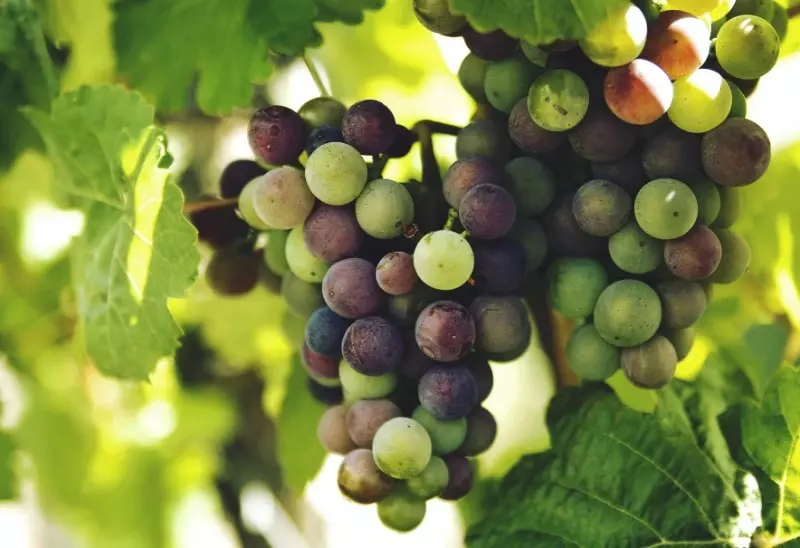
This how-to grow a grapevine guide will help you grow your own thriving vine and harvest a satisfying crop of grapes. You might even be able to make your own wine. Growing grapevines has become more prevalent in recent years, and with just a few tips, such as what soil they prefer and how to care for them, you’ll be well on your way to harvesting your first bunches of delicious grapes.
How to grow a grapevine starts with the position
Imagine the vineyards of Italy or Spain, and you will no doubt envisage the blue, sunny skies. Grapevines grow best in warm, bright areas and well-drained soil. You’ll need a sheltered space for your vines, ideally against a south-facing wall or up a pergola. South-west facing is also excellent; you could even grow them in large containers. If that’s not possible, you can grow grapevines in a greenhouse.
Soil is important to learn how to grow a grapevine
Fortunately, grapevines tolerate many different soil types. The key is to make sure it is well-drained soil. If your soil isn’t free draining, add some well-rotted organic matter and some sandy or horticultural grit. You can also test your soil pH with a soil testing kit, which is easy and fun. Grapevines prefer a pH of 6.5 to 6.8.
How to grow a grapevine with watering and feeding needs
If you have just planted new grapevines, they will need regular watering to help them settle and establish. If you have an older grapevine, it will need very little water and are quite drought tolerant. However, as they grow during the growing season, water about every ten days to keep the roots moist and prevent disease. If you grow in a greenhouse, your vines will need regular watering. Mulching vines is helpful not just for moisture retention but also for nutrients. Well-rotted organic matter can be used and feeding greenhouse-grown vines with tomato feed (high in potassium) every couple of weeks can also be beneficial.
How to grow a grapevine and prune it
There are two methods of pruning - Guyot System and Rod and Spur. Mainly pruning is undertaken during early winter with regular maintenance throughout the year.
- The Guyot system is for grapevines grown outside and trains fruiting arms along wires.
- The Rod and Spur method is for greenhouse grapevines and those growing against walls.
There are many resources online with more detail.
General care for your grapevines
Hot, dry weather can contribute to mildew, and you might find wasps enjoying the vines. Wasp traps can be helpful and ensure there is plenty of air circulation with good pruning and watering in dry weather.
For grapevines, pruning accessories and advice - visit us in store.