Now it’s time to fertilise garden plants. You might be wondering why plants need extra nutrition, which fertiliser to use and how to apply it to your plants. How and when you use fertilisers will impact your plants, so it’s good to know the best way to use them. Fertilisers help plant growth through various stages, from budding to flowers and fruit production. Plants use a lot of nutrients from the soil and need a great deal of energy for strong roots and leaves for photosynthesising. Applying fertilisers can help ensure your plants have everything they need to thrive.
When to know it’s time to fertilise garden plants
Firstly, fertiliser isn’t used to keep plants alive. It’s used as a growing aid and to help them flourish.
-
If you have mulched your beds and borders and looked after your soil, you may not need any fertiliser because allowing plants to grow naturally in good soil is always the best way.
-
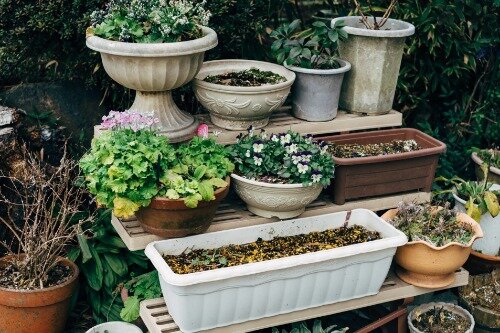
In certain circumstances, it will be needed, such as if you are growing in pots and containers, which will need to be fertilised throughout the growing season.
-
The right time to start fertilising plants is as they begin to actively grow in springtime and throughout summer, but not as they go into the end of their growing season.
-
Trees and shrubs are mainly only fertilised once a year in early spring but often not necessary. Mainly, fertilisers are used for fruit, vegetables and bedding plants.
What fertilisers to use
There are many fertilisers to use from organic garden compost, well-rotted manure, mushroom compost and seaweed, which will all feed the soil.
-
Synthetic fertilisers have a higher concentration of nutrients and are available as pellets, granules, powders and liquids.
-
Controlled release fertilisers are granules coated with a porous material that allows water to get in and the fertiliser to release into the soil.
-
Slow-release fertilisers degrade slowly and are often organic.
There are many different liquid fertilisers to choose from, including seaweed and plant-based, which you mix with water to apply. Or you can make your own from comfrey or nettle foliage in a bucket of water and then use diluted.
How to apply fertilisers
It depends on the type of fertiliser you are using, so it is essential to read the instructions on the fertiliser you have chosen. Some will need diluting. Some will be applied directly or mixed in the soil. Never overuse, and always make sure your fertiliser is safe for wildlife, pets and children.
We have a range of fertilisers in store and assistants to help you choose. Visit our centre in Stocksfield.