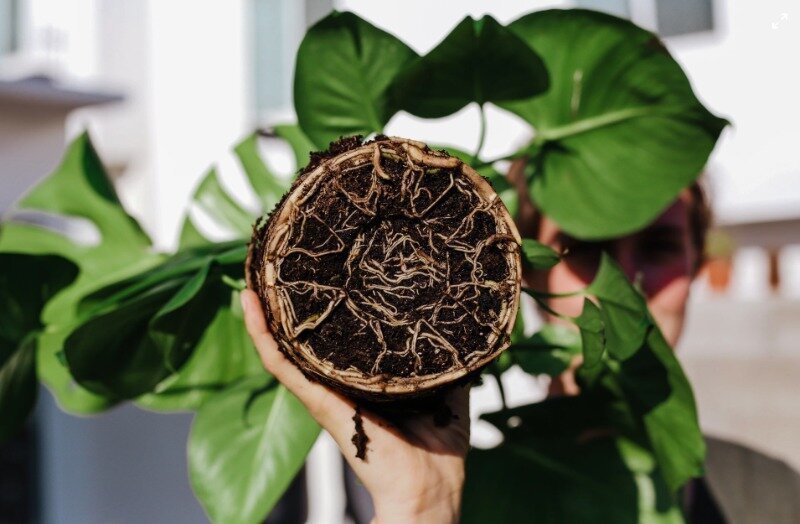
Why is root washing your new plants a good idea? Have you heard of root washing before? It is a way of ‘washing’ the roots of new trees, shrubs and perennials before you plant them in their new position in your garden. It is an exciting concept that has become more popular recently to help your new plants establish after planting. It might seem odd at first, but if the process is undertaken correctly, root washing can give your plants a better chance of thriving.
Why start root washing your new plants
Often plants don’t establish after transplanting or even die because the roots don’t correctly establish themselves. This could be for various reasons, but you’ll usually notice leaves and flowers continue to grow just fine, and that is because the roots haven’t been disturbed. But under the soil, the roots may not be adequately established to keep the plant thriving long term. The difference with container-grown, as opposed to bare-root plants, is that bare roots put their energy into establishing the roots first, which gives the plant a better chance of survival. So, to allow roots contact with the soil they are being planted in, they could be ‘washed’ to grow similarly to bare roots.
How to start root washing your new plants
When you purchase a container plant, ideally in its dormant stage (because this reduces stress), remove the plant from the container and shake or gently tap away any loose compost, any weeds and anything else, so you are left with the plant and the root ball with the growing medium intact. If you have a wheelbarrow, this can be ideal for root washing or a large container. Fill the wheelbarrow with water high enough to cover the ball completely. It is crucial never to let the root ball dry out, so it must be fully submerged. Remove as much of the compost as you possibly can with your hands.
What next when you start root washing your new plants
When you get to the point of seeing the entire root system, gently tease them, so they begin to spread outwards rather than in a circle. Poor root structure can impede root establishment and, therefore, plant growth, so prune away woody roots and straighten out other roots as much as you can.
When you have finished root washing your new plants
When you are happy with the root structure, plant out by digging a hole with enough space around it for the roots to spread. Backfill with soil and water in well. Mulching will also help to retain moisture.
Get your plants, tools and wheelbarrow ready to root wash from our in store options.