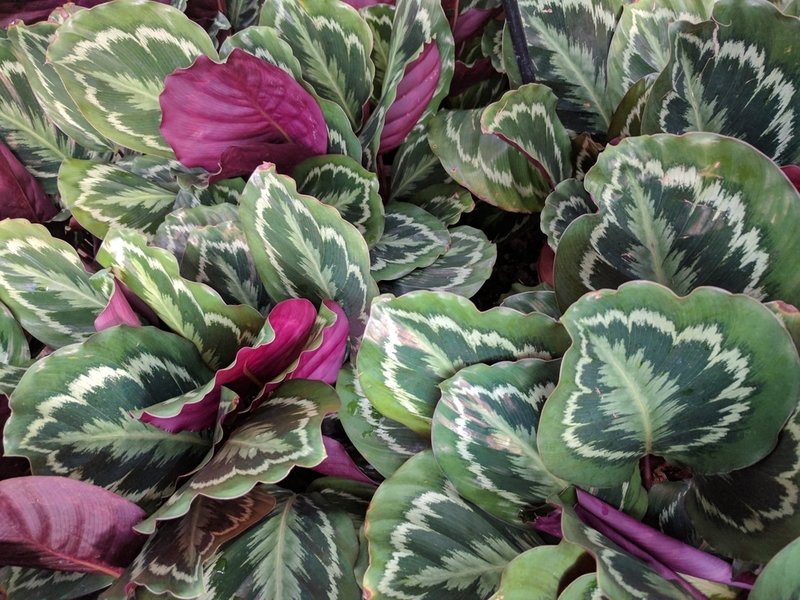
If you’re looking for a houseplant with sensational foliage, a Calathea is just what you’re after. Calatheas belong to a genus of plants that come from the tropics, mainly in Brazil. They have many common names, including zebra plants and peacock plants, but are most often called prayer-plants. This name comes from the way some species move their leaves, closing them up at night like praying hands and opening them wider during the day.
Calatheas are prized for their beautiful leaves, marked with colourful geometric patterns that look as though they have been painted on by an artist.
Where to grow calathea
In their natural environment, calatheas grow in the dappled shade cast by tall trees in tropical forests. When grown as houseplants, they do best in bright but indirect light and will cope quite well with low light conditions. In fact, too much direct bright light is likely to burn their leaves and affect the colourful leaf markings.
Calatheas prefer soil that is moist but not sodden. When planting them in pots, use a pot with good drainage holes and a good potting compost that retains moisture. Water regularly to keep the compost moist but don’t allow them to stand in water for long periods, as this can cause root rot. Ideally, use rainwater or filtered water.
Being tropical plants, calatheas like high humidity and a warm environment. To raise the humidity around your plant, stand the pot on a drip tray filled with pebbles and topped up with water. Mist occasionally, spraying the leaves from below to avoid water collecting around new leaf buds.
Aim for a reasonably constant temperature, anywhere between 18-30°C (65-86°F), away from cold draughts, and don’t let the temperature around the plant drop below 15°C (59°F). Drooping leaves are a sign that the plant is too cold – if this happens, move the plant to a warmer place as soon as possible.
Caring for calathea
Feed your calathea plant once a month from spring to autumn, using a liquid houseplant fertilizer diluted to half strength.
There is no need to prune a calathea, simply cut off any dead leaves as they appear. If your plant loses all its leaves as a result of stress, such as underwatering, don’t give up hope straight away - calathea are surprisingly resilient plants and it may well put out new leaves once the problem has been resolved.
Calathea problems
Once you have found the right location for your calathea plant, problems will most likely to be caused by either over- or under-watering. Here are the signs to watch out for:
Under-watering:
- Wilting
- Curling leaves
- Leaf edges browning
Over-watering
- Yellowing leaves
- Rotting stems
If you’re looking for a houseplant to brighten up your home, come and see the exciting range available in our centres. We’ve got the perfect plant for you!